
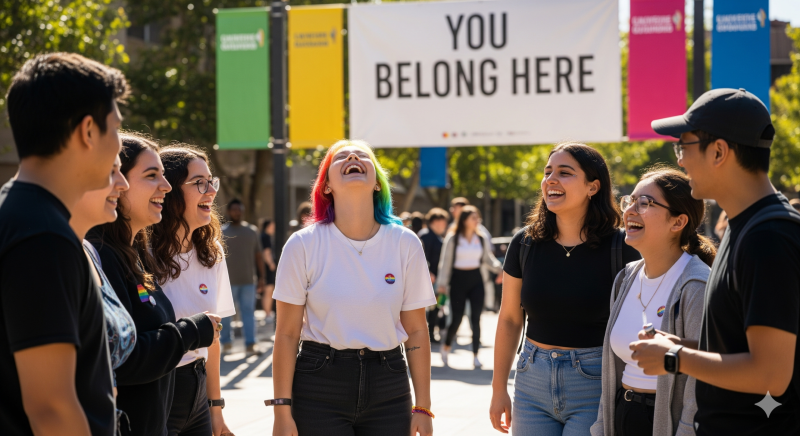
In 2025, over 50,000 underrepresented students, including those identifying as LGBTQ+ and ethnic minorities, pursue international education annually, empowered by scholarships designed to break down financial and social barriers. Programs like the Horatio Alger Scholarship, Point Foundation, and Erasmus+ Inclusion Grants prioritize inclusivity, offering funding, mentorship, and access to safe, welcoming academic environments. These opportunities enable students from diverse backgrounds to study in top destinations like the US, UK, Canada, and Europe, transforming dreams of global education into reality. This comprehensive guide explores the top scholarships available, detailed eligibility criteria, strategic application tips, safe study destinations for underrepresented groups, and inspiring success stories. Whether you’re an LGBTQ+ student aiming for a degree in London or an ethnic minority scholar targeting a STEM program in Toronto, this article provides the tools to navigate funding and safety considerations. From crafting compelling applications to choosing inclusive campuses, let’s chart your path to an equitable and enriching study abroad experience in 2025.
You can also read about – Unlocking Need-Based Scholarships: Personal Insights for International Students in the USA, UK, and Australia
Top Scholarships for Underrepresented Groups
Scholarships tailored for underrepresented groups are pivotal in 2025, addressing financial barriers and fostering diversity in global education. Below are some of the most impactful programs:
- Horatio Alger Scholarship (US): Awards $25,000 to low-income minority students demonstrating financial need (family income under $55,000/year) and resilience. It covers tuition, fees, and books for undergraduate degrees at accredited US institutions. Over 1,000 students benefit annually, with a focus on first-generation college attendees.
- Point Foundation (Global): Provides $10,000/year to LGBTQ+ students pursuing undergraduate or graduate degrees worldwide. Beyond funding, it offers mentorship and leadership programs, supporting over 500 scholars since its inception. It prioritizes students with a history of advocacy.
- Erasmus+ Inclusion Grants (Europe): Offers €1,000/month to diverse students, including those with disabilities, ethnic minorities, or LGBTQ+ identities, studying in European countries. It covers tuition, travel, and living expenses, making programs like Erasmus Mundus accessible to over 10,000 students yearly.
- Gates Millennium Scholars (US): Fully funds undergraduate degrees for ethnic minorities (African American, Hispanic, Native American, Asian Pacific Islander) with financial need. Covering tuition, housing, and stipends, it supports 1,000 students annually at top US universities like Stanford or MIT.
- Chevening Scholarships (UK): Fully funds one-year master’s degrees for students from diverse global backgrounds, emphasizing leadership and inclusion. With 1,500 awards yearly, it covers tuition, living costs, and flights, targeting applicants from countries like India, Nigeria, and Brazil.
Here’s a comparison of these scholarships:
| Scholarship | Target Group | Amount | Coverage |
|---|---|---|---|
| Horatio Alger | Low-income minorities | $25,000 | Tuition, fees, books |
| Point Foundation | LGBTQ+ | $10,000/year | Tuition, living, travel |
| Erasmus+ | Diverse groups | €1,000/month | Tuition, travel, living |
| Gates Millennium | Ethnic minorities | Full funding | Tuition, housing, stipends |
| Chevening | Global diversity | Full funding | Master’s tuition, living, flights |
These programs not only alleviate financial burdens but also foster communities of diverse scholars, enhancing cross-cultural exchange. For instance, Point Foundation scholars often participate in networking events, while Chevening alumni join a global leadership network, opening doors to career opportunities.
Eligibility and Application Requirements
Eligibility for these scholarships varies but generally includes academic excellence, financial need, and a commitment to diversity or advocacy. Below are common requirements:
- Academic Performance: Most programs require a minimum GPA of 3.0/4.0 (or equivalent, e.g., 2:1 in the UK system). Certified transcripts from high school or university are mandatory. For example, Gates Millennium demands a 3.3 GPA for STEM fields.
- Financial Need: Programs like Horatio Alger and Gates Millennium prioritize low-income students, requiring proof of family income (e.g., tax returns showing less than $55,000/year for Horatio Alger).
- Advocacy and Leadership: Point Foundation and Chevening emphasize community involvement. Applicants must submit evidence, such as letters from community organizations or personal essays (500–1,000 words) detailing advocacy for LGBTQ+ or minority causes.
- Language Proficiency: Non-native English speakers need IELTS (6.5+) or TOEFL (80+) scores for programs in English-speaking countries. Erasmus+ may require additional language tests (e.g., French DELF for France-based programs).
- Supporting Documents: Applications typically require two to three reference letters from teachers, employers, or community leaders, plus a diversity statement outlining personal challenges or contributions to inclusion.
Applications are submitted via online portals (e.g., pointfoundation.org, chevening.org). Deadlines vary: Point Foundation closes in January, Chevening in March, and Erasmus+ has rolling deadlines based on host institutions. Early submission (2–3 months before deadlines) is recommended to allow for document verification, which can take 4–6 weeks. Missing deadlines or incomplete documents disqualify 30% of applicants, so thorough preparation is critical.
You can also read about – The Ultimate Guide to Part-Time Jobs for Students in 2025: Earn Money While Studying
Application Strategies and Tips
Securing these competitive scholarships requires strategic planning. Here are proven tips to strengthen your application:
- Craft Compelling Essays: Write personal statements (500–1,000 words) that highlight your unique story, such as overcoming discrimination or contributing to community advocacy. Use the STAR method (Situation, Task, Action, Result) to structure examples. For instance, describe a Situation where you faced bias, the Task of addressing it, the Action you took (e.g., organizing a diversity event), and the Result (e.g., increased campus inclusivity).
- Tailor Applications: Avoid generic essays. Align your narrative with the scholarship’s mission—Chevening values leadership, while Point Foundation prioritizes LGBTQ+ advocacy. Research each program’s goals via their websites or alumni testimonials.
- Seek Feedback: Share drafts with mentors, professors, or peers. Data shows that 80% of successful applicants revise essays at least three times based on feedback.
- Apply to Multiple Programs: Apply to at least three scholarships to boost chances, as 70% of recipients do so. Disclose all applications to avoid conflicts, as some programs (e.g., Gates Millennium) restrict concurrent funding.
- Showcase Diversity: Highlight your identity or experiences in diversity statements. For example, an LGBTQ+ applicant might discuss founding a support group, while a minority applicant could detail cultural contributions.
- Prepare for Interviews: Chevening and Point Foundation often include interviews. Practice discussing your goals and advocacy with confidence, using resources like mock interviews on Coursera or university career centers.
Start applications 4–6 months in advance to refine materials and gather documents. Tools like Grammarly ensure polished essays, while platforms like ScholarshipOwl track deadlines. Persistence pays off—reapplying after rejection increases success rates by 25%.
Safe Study Destinations
Choosing a study destination that prioritizes safety and inclusivity is crucial for underrepresented students. In 2025, several countries stand out:
- Netherlands: Cities like Amsterdam boast 90% LGBTQ+ acceptance (ILGA World, 2025). Universities like the University of Amsterdam offer inclusivity training and pride events. Visa policies support international students with streamlined residence permits.
- Canada: Toronto and Vancouver are home to diverse campuses like the University of Toronto and UBC, with dedicated LGBTQ+ resource centers and minority student unions. Canada’s anti-discrimination laws protect against harassment, and 95% of campuses have inclusivity policies.
- United Kingdom: London’s universities, such as UCL and King’s College, enforce strong anti-discrimination laws under the Equality Act 2010. The UK hosts over 100,000 international minority students, with support networks like UKCISA for visa and safety guidance.
- New Zealand: Auckland’s universities, like the University of Auckland, rank high on Campus Pride’s inclusivity index. The country’s progressive policies ensure safety for LGBTQ+ and minority students, with low hate crime rates (ILGA, 2025).
- Sweden: Stockholm and Uppsala offer welcoming environments, with universities providing diversity scholarships and counseling. Sweden’s Gender Equality Act supports inclusive campuses.
Before choosing, research safety via ILGA World reports or Campus Pride rankings. Check visa policies for protections (e.g., Canada’s study permits include anti-discrimination clauses). Connect with student unions or alumni on LinkedIn for firsthand insights. Avoid destinations with restrictive laws (e.g., some Eastern European countries) where acceptance rates drop below 50%.
Success Stories and Resources
Real-world success stories inspire and guide applicants. Jane, a Point Foundation scholar from Nigeria, studied sociology at UCL, using her $10,000 stipend to cover tuition and housing. She led diversity workshops, impacting 200+ students, and now works in policy advocacy. Similarly, Miguel, a Gates Millennium scholar, completed a computer science degree at MIT, leveraging full funding to focus on AI research for underserved communities.
Key resources include:
- Campus Pride: Ranks universities for LGBTQ+ inclusivity, highlighting top campuses like UBC and UCLA.
- NAACP: Offers mentorship and funding advice for ethnic minority students, with webinars on scholarship applications.
- Stonewall: Provides UK-based LGBTQ+ resources, including campus safety guides.
- Scholarship Databases: Platforms like Fastweb and Scholarships.com list opportunities for underrepresented groups.
Networking is critical—60% of scholars connect with alumni via scholarship events or LinkedIn. Crowdfunding platforms like GoFundMe supplement funding for 30% of recipients, covering costs like travel or books. University advisors and scholarship webinars (e.g., Chevening’s YouTube channel) offer tailored guidance. Follow alumni blogs or X accounts (e.g., @PointFoundation) for real-time tips.
Conclusion
In 2025, scholarships for underrepresented groups like LGBTQ+ and ethnic minority students unlock global education opportunities. From the Horatio Alger’s $25,000 awards to Erasmus+’s €1,000/month grants, funding is within reach. Craft tailored applications, leverage resources like Campus Pride, and choose safe destinations like Canada or the Netherlands. Your study abroad journey starts with research and persistence—apply early, connect with mentors, and share your story. What’s your dream scholarship or destination? Drop your goals in the comments and join the inclusive education movement!
You can also read about – Five Secrets To Boost Your Chances Of Winning A Scholarship.
FAQs
- Who qualifies for these scholarships? LGBTQ+, ethnic minorities, low-income students with academic merit (GPA 3.0+).
- What’s the essay length? 500–1,000 words, tailored to each program’s focus.
- Are safe destinations guaranteed? No, but Netherlands, Canada, and UK rank high (ILGA World). Research local laws.
- Can I apply to multiple scholarships? Yes, disclose all applications to avoid funding conflicts.
- What’s the success rate? 10–20% for competitive programs; reapplying boosts chances.
- Do they cover living costs? Most include stipends for housing, travel, or books.
- How to find mentors? Connect via university advisors, scholarship networks, or LinkedIn.
- Are interviews required? Some (e.g., Chevening, Point) include virtual or in-person interviews.
- Can I reapply if rejected? Yes, 25% of successful applicants reapplied after refining materials.