
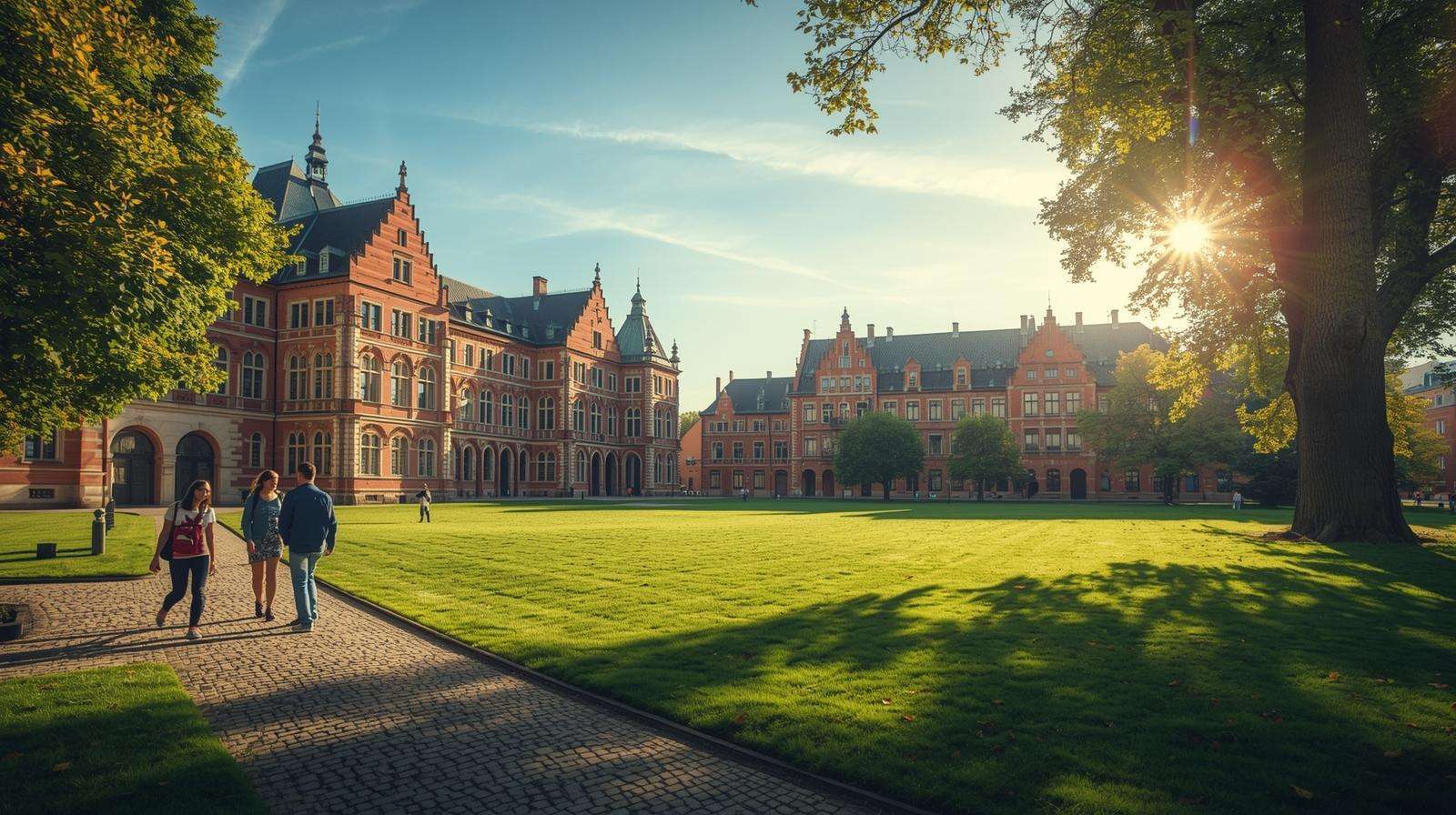
Pursuing a degree in Europe without the burden of tuition fees is not just a dream—it’s a reality in 2025. Countries like Germany, Norway, and Finland offer tuition-free education at public universities, while EU-funded initiatives like Erasmus Mundus provide generous stipends for students worldwide. With over 1.7 million international students studying in Europe, these programs dismantle financial barriers, granting access to world-class education ranked highly in global metrics like the QS World University Rankings. This comprehensive guide dives into tuition-free countries, EU scholarship programs, detailed application processes, strategies to manage living costs, and alternative funding options. Whether you’re aiming for a bachelor’s, master’s, or PhD, this article provides actionable steps to secure a no-cost degree path in Europe. From choosing the right program to navigating visa requirements, we’ll cover everything you need to embark on your academic journey. Let’s explore how to make your European education affordable and achievable!
Tuition-Free Countries in Europe
Several European countries stand out for their tuition-free or low-cost public universities, making them magnets for international students. Below, we explore the top destinations for 2025, detailing their policies, costs, and standout institutions.
Germany
Germany is a leader in tuition-free education. Public universities charge no tuition for EU/EEA students, and in most states, this extends to international students. However, in Baden-Württemberg, non-EU students pay approximately €1,500 per semester. Administrative fees (€100-400/year) apply everywhere. Top universities like the Technical University of Munich (TUM) and Ludwig Maximilian University (LMU) rank among the world’s best, excelling in fields like engineering, medicine, and humanities. Programs are offered in both German and English, with over 1,400 English-taught degrees available.
Norway
Norway offers free tuition at public universities for all students, regardless of nationality. Institutions like the Norwegian University of Science and Technology (NTNU) and the University of Oslo shine in engineering, environmental sciences, and social studies. A small semester fee (€50-100) covers student services. Norway’s high quality of life and stunning landscapes make it a unique study destination, though living costs are higher (more on this later).
Finland
Finland provides free tuition for EU/EEA students and all PhD candidates. Non-EU students face fees of around €10,000/year for bachelor’s and master’s programs, but generous scholarships often cover 50-100% of these costs. The University of Helsinki, a global leader in education and sustainability, offers robust support for international students. English-taught programs are widely available, particularly at the master’s level.
Austria
Austria charges EU/EEA students no tuition, while non-EU students pay €726 per semester, often waived through university grants or scholarships. The University of Vienna, one of Europe’s oldest institutions, excels in humanities and sciences. Austria’s central location and vibrant cultural scene add to its appeal.
| Country | Tuition (EU/EEA) | Tuition (Non-EU) | Top University |
|---|---|---|---|
| Germany | Free | €0-3,000/year | TUM |
| Norway | Free | Free | NTNU |
| Finland | Free | €10,000/year | University of Helsinki |
| Austria | Free | €1,452/year | University of Vienna |
Other Notable Countries
- Slovenia: Free for EU/EEA students; non-EU pay €2,000-5,000/year, with waivers available.
- Czech Republic: Free for programs in Czech; English-taught degrees cost €2,000-4,000/year.
- Poland: Low fees (€2,000/year) for all, with scholarships for high-achieving students.
These countries combine affordability with academic excellence, making them ideal for budget-conscious students. Research language requirements early, as some programs (e.g., in Germany or Czech Republic) may require proficiency in the local language, though English options are growing.
EU-Funded Scholarship Programs
The European Union supports international students through prestigious, fully-funded programs that cover tuition, travel, and living expenses. Below are the key initiatives for 2025.
Erasmus Mundus Joint Master’s Degree (EMJMD)
The Erasmus Mundus program funds over 120 master’s programs across disciplines like STEM, sustainability, and social sciences. These 1-2 year programs are offered by consortia of European universities, allowing students to study in multiple countries. Benefits include full tuition coverage, travel allowances, and a €1,000/month stipend. Eligibility requires a bachelor’s degree, a minimum GPA of 3.0/4.0, and a compelling motivation letter. With a 15% acceptance rate, competition is fierce, but the program’s global reputation and networking opportunities are unmatched. Popular programs include Euroculture (social sciences) and MA Advanced Robotics (engineering).
Marie Skłodowska-Curie Actions (MSCA)
MSCA targets PhD researchers, offering €3,000/month stipends, research grants, and mobility allowances. These programs focus on innovation, supporting fields like biotechnology, AI, and climate science. Applicants need a master’s degree and a research proposal aligned with MSCA priorities. The program fosters collaboration with industry and academia, boosting career prospects.
DAAD (German Academic Exchange Service)
Germany’s DAAD scholarships provide €934/month for master’s students and €1,200/month for PhD candidates. Open to global applicants, DAAD supports diverse fields, from engineering to cultural studies. Requirements include academic excellence, language proficiency (German or English), and a clear study plan. DAAD also offers short-term research grants and summer courses.
Other EU Initiatives
- Horizon Europe: Funds research-focused master’s and PhD programs, emphasizing sustainability and technology.
- EIT (European Institute of Innovation and Technology): Supports master’s programs in innovation-driven fields like clean energy, with stipends up to €2,000/month.
| Program | Level | Stipend | Eligibility |
|---|---|---|---|
| Erasmus Mundus | Master’s | €1,000/month | Global, GPA 3.0+ |
| Marie Curie | PhD | €3,000/month | Research proposal |
| DAAD | Master’s/PhD | €934-1,200/month | Academic excellence |
Success Story: Maria, a Brazilian student, secured an Erasmus Mundus scholarship for a master’s in Sustainable Energy Systems. Studying in Spain and Sweden, she graduated debt-free and now works for a renewable energy firm in Europe.
Application Process for Free Degrees
Securing a tuition-free degree or scholarship requires careful planning. Here’s a step-by-step guide to navigate the process in 2025.
- Research Programs and Countries: Use platforms like DAAD, Studyportals, or erasmusmundus.eu to identify programs. Check eligibility, language requirements, and deadlines. For example, Germany’s universities often have July deadlines for fall intake, while Erasmus Mundus closes in January.
- Prepare Documents: Gather transcripts, a CV, a motivation letter (500-1,000 words), and two reference letters. Non-EU students need IELTS (6.5+) or TOEFL (80+) for English-taught programs. Certified translations are required for non-English documents.
- Submit Applications: Apply directly via university portals or centralized platforms like erasmusmundus.eu. Pay attention to country-specific requirements (e.g., Germany’s Uni-Assist for some universities).
- Interviews and Follow-Ups: Some programs, like Erasmus Mundus, require interviews. Prepare to discuss your academic goals and motivation.
- Secure a Visa: Non-EU students need a student visa. For Germany, provide proof of funds (€11,208/year). Processing takes 4-8 weeks, so apply early.
- Track Deadlines: Missing deadlines is a common pitfall. Use tools like Trello or Google Calendar to stay organized.
Tips for Success:
- Tailor your motivation letter to each program, highlighting academic fit and career goals.
- Contact professors or alumni for insights on competitive programs.
- Apply to multiple universities to increase funding chances.
Processing times vary: university admissions take 4-8 weeks, while scholarships like Erasmus Mundus may take 3-6 months. Early applications (6-12 months in advance) are critical.
Managing Living Costs
While tuition may be free, living costs in Europe range from €700 (Poland, Czech Republic) to €1,200 (Norway, Finland). Here’s a breakdown and strategies to save.
Cost Breakdown
- Rent: €400-600/month (dorms are cheaper, €200-400).
- Food: €200-300/month (cooking at home saves 30-50%).
- Transport: €50-100/month (student discounts reduce costs).
- Miscellaneous: €100-200/month (books, leisure, insurance).
Cost-Saving Strategies
- Student Housing: Dorms or shared flats are affordable. In Germany, Studentenwerk manages dorms starting at €250/month.
- Scholarships: Erasmus Mundus and DAAD cover 80-100% of living costs. National scholarships (e.g., Finland’s €5,000/year grants) help non-EU students.
- Part-Time Work: International students can work 20 hours/week, earning €10-15/hour. Common jobs include tutoring, retail, or campus roles like library assistants.
- Discounts: Use student cards for transport (e.g., Germany’s Semesterticket, €30-60/month) and cultural events.
- Budgeting Tools: Apps like Splitwise or YNAB track expenses. Meal prepping and second-hand bookstores cut costs further.
Country-Specific Insights
- Germany: Affordable cities like Leipzig (€700/month) contrast with Munich (€1,000/month). Universities offer free language courses to boost employability.
- Norway: High costs (€1,200/month) are offset by free tuition and high part-time wages (€15-20/hour).
- Finland: Helsinki’s costs (€900-1,100/month) are manageable with scholarships and student unions offering subsidized meals (€2-5).
Student Example: Ahmed, a Pakistani student in Norway, combines an Erasmus Mundus stipend with 15 hours/week tutoring, covering 90% of his expenses in Oslo.
Alternative Funding Options
Beyond EU programs, students can tap into national, university, or private funding to study for free.
National Scholarships
- Norway’s Quota Scheme: Covers tuition and living costs for students from developing countries (phased out in some universities, check availability).
- Sweden’s Visby Programme: Offers €900/month for students from select countries.
- Finland’s Tuition Scholarships: Cover 50-100% of non-EU fees, often paired with €5,000/year grants.
University Grants
Many universities offer merit-based grants. For example, the University of Helsinki provides €5,000-10,000/year scholarships for non-EU students. Germany’s TUM offers need-based aid up to €500/month.
Private and Crowdfunding
- Crowdfunding: Platforms like GoFundMe help students raise €2,000-5,000 from communities.
- NGOs and Foundations: Organizations like the Aga Khan Foundation fund students from specific regions.
- Teaching Assistantships: Earn €500-1,000/month by assisting professors or tutoring.
Combining Sources
Data shows 60% of funded students combine multiple sources. For instance, Lisa from Nigeria used a DAAD scholarship (€934/month) and a university grant (€300/month) to study in Berlin debt-free.
Conclusion
In 2025, Europe’s no-cost degree paths offer unparalleled opportunities for international students. From Germany’s tuition-free universities to Erasmus Mundus’s generous stipends, financial barriers are lower than ever. Start by researching programs, applying early, and leveraging scholarships and part-time work to manage costs. With strategic planning, your dream of studying in Europe—whether in Oslo’s fjords or Vienna’s historic halls—is within reach. Share your study plans in the comments—what country or program excites you most?
FAQs
- Which countries offer free tuition? Germany, Norway, Finland for EU/EEA; Norway for all.
- What’s the Erasmus Mundus stipend? €1,000/month plus tuition and travel.
- Can non-EU students study for free? Yes, in Norway; elsewhere, scholarships are key.
- How much are living costs? €700-1,200/month, varying by country.
- Are jobs allowed? Yes, up to 20 hours/week at €10-15/hour.
- What’s the application deadline? Varies; January for Erasmus Mundus, July for Germany.
- Are degrees recognized? Yes, globally, per QS World University Rankings.
- Can I study in English? Yes, over 2,000 English-taught programs exist.